English
 French
 Spanish
 Portuguese
 Deutsch
 Italiano
 Greek
Greek
 Reels
Reels
 Entdecken Veranstaltungen
 Meine Events
 Entdecken Blogs
 Entdecken Marktplatz
 Entdecken Gruppen
 Meine Gruppen
 Entdecken Seiten
 Seiten denen du folgst
 Beliebte Beiträge
 Beiträge entdecken
 Jobs
Jobs
 Foren
Foren



Best Candle Stands to Beautify Your Dining Table Décor
Other |
2025-12-30 10:58:38
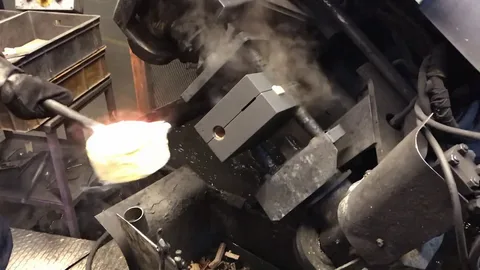
Brass casting has been an integral part of metalworking for centuries, providing durable and versatile components for a variety of industrial, commercial, and decorative applications. Known for its corrosion resistance, machinability, and aesthetic appeal, brass continues to be a preferred material for manufacturers worldwide. Modern brass casting services offer precision, quality, and customized solutions that cater to the growing needs of industries such as marine, construction, automotive, electrical, and architecture.
Brass casting is a process where molten brass, an alloy primarily composed of copper and zinc, is poured into molds to form precise components. Once the metal cools and solidifies, it produces durable, corrosion-resistant, and dimensionally accurate parts suitable for a wide range of applications.
Unlike other metal casting methods, brass casting is highly versatile. It allows for the production of both functional industrial components and decorative items, offering a combination of strength and aesthetic appeal. Modern manufacturing techniques ensure that brass casting services provide consistent, high-quality output for every project.
Brass casting plays a vital role in multiple industrial sectors due to the alloy’s unique properties, including:
Excellent corrosion resistance, particularly against saltwater and moisture
High thermal and electrical conductivity, ideal for electrical components
Easy machinability for precision parts
Attractive gold-like appearance for decorative applications
Durability and long service life
Industries that rely on brass castings benefit from components that can withstand wear, environmental exposure, and mechanical stress while maintaining their appearance and performance.
Brass casting has diverse applications across various industries. Some of the most common uses include:
Marine Industry: Components like valves, pumps, propellers, and fittings that resist corrosion from saltwater environments.
Electrical and Electronics: Terminals, connectors, and switchgear components that require excellent conductivity and durability.
Automotive and Mechanical Engineering: Gears, bearings, bushings, and other precision parts that require strength and reliability.
Construction and Plumbing: Faucets, valves, pipe fittings, and architectural fixtures for both functional and aesthetic use.
Decorative and Artistic Applications: Sculptures, hardware fittings, and ornamental components that showcase the alloy’s attractive finish.
These applications highlight the versatility and importance of brass casting services in producing components that meet both functional and design requirements.
Different brass alloys are chosen based on the required properties of the finished component. Common types include:
Alpha Brass: High copper content, excellent corrosion resistance, and suitable for decorative applications.
Alpha-Beta Brass (Cartridge Brass): Balanced copper and zinc content, suitable for hot working and durable industrial components.
Leaded Brass: Contains small amounts of lead for improved machinability, ideal for complex or precision components.
Aluminum Brass: Enhanced corrosion resistance for marine and industrial applications.
Selecting the right brass alloy is critical to achieving optimal performance, longevity, and visual appeal.
Brass casting involves a series of steps that ensure accuracy, quality, and consistency:
Pattern Creation: A replica of the final component is made to form the mold.
Mold Preparation: Using sand, ceramic, or metal molds depending on component complexity and production volume.
Melting: Brass alloy is heated to the required temperature for pouring.
Pouring: Molten brass is carefully poured into the prepared mold.
Cooling and Solidification: The metal is allowed to cool naturally, forming the solid component.
Finishing and Machining: Removing excess material, polishing, and precision machining to achieve final specifications.
Modern brass casting services incorporate advanced technologies, including CNC machining, quality inspection, and computer-aided design (CAD) for precision and efficiency.
Working with an experienced brass casting service provider offers several advantages:
Precision and Accuracy: Skilled technicians and advanced equipment ensure dimensional accuracy and repeatability.
Durability: Components are designed to withstand wear, environmental factors, and mechanical stress.
Customization: Ability to create bespoke components tailored to specific project requirements.
Cost Efficiency: Optimized casting processes reduce material waste and production time.
Quality Assurance: Rigorous quality control ensures components meet international standards and client specifications.
These benefits make professional brass casting services essential for industries that require high-performance, reliable, and precise components.
Quality is a cornerstone of successful brass casting. Reputable casting service providers implement comprehensive quality control measures to ensure components meet required specifications. Common quality checks include:
Dimensional accuracy verification
Surface finish inspection
Material composition testing
Non-destructive testing (NDT) for internal defects
By adhering to stringent quality standards, brass casting services guarantee long-lasting, reliable components suitable for demanding applications.
Modern foundries are increasingly focusing on sustainable practices to reduce environmental impact. Brass is highly recyclable, and scrap material can be reused without compromising quality. Additionally, advanced foundries implement energy-efficient processes and minimize waste, making brass casting an environmentally responsible manufacturing solution.
Sustainable practices not only protect the environment but also enhance efficiency and reduce production costs, benefiting both manufacturers and clients.
Selecting a professional and experienced brass casting service provider is critical for project success. When choosing a partner, industries should consider:
Experience and technical expertise in brass casting
Range of services, including custom casting and finishing
Advanced machinery and production facilities
Quality assurance protocols and certifications
Timely delivery and customer support
A trusted provider ensures high-quality, durable, and precise components that meet industry requirements.
Brass casting is essential for multiple industries, including:
Marine and Offshore: Corrosion-resistant components for ships, offshore platforms, and underwater equipment.
Automotive: High-performance engine parts, bushings, and mechanical components.
Construction and Architecture: Durable and visually appealing fixtures and hardware.
Electrical and Electronics: Components requiring excellent conductivity and reliability.
Industrial Equipment: Pumps, valves, and machinery components built for heavy-duty operations.
These applications underscore the critical role of brass casting services in modern industry.
Brass casting continues to be a cornerstone of manufacturing, providing durable, corrosion-resistant, and versatile components for a wide range of industrial, commercial, and decorative applications. Professional brass casting services ensure precision, quality, and reliability, supporting industries such as marine, automotive, construction, and electrical engineering.
From traditional craftsmanship to modern CNC-assisted processes, brass casting offers unparalleled strength, aesthetic appeal, and performance. Choosing an experienced service provider ensures that every component meets high standards of durability, accuracy, and functionality, making brass casting an indispensable solution for today’s industrial needs.